Virridy

Meet the Lume

Got Poop? Find out if you're drinking or swimming in contaminated water.

The Lume is the first single-unit fluorimetric sensor for continuous microbial contamination monitoring. Its integrated power and data transmission reduce deployment and maintenance costs while delivering higher sensitivity and accuracy than other sensors or traditional sampling methods.

Continuous, real-time microbial water quality monitoring — for the cost of a single grab sample.

Virridy Lume Sensor

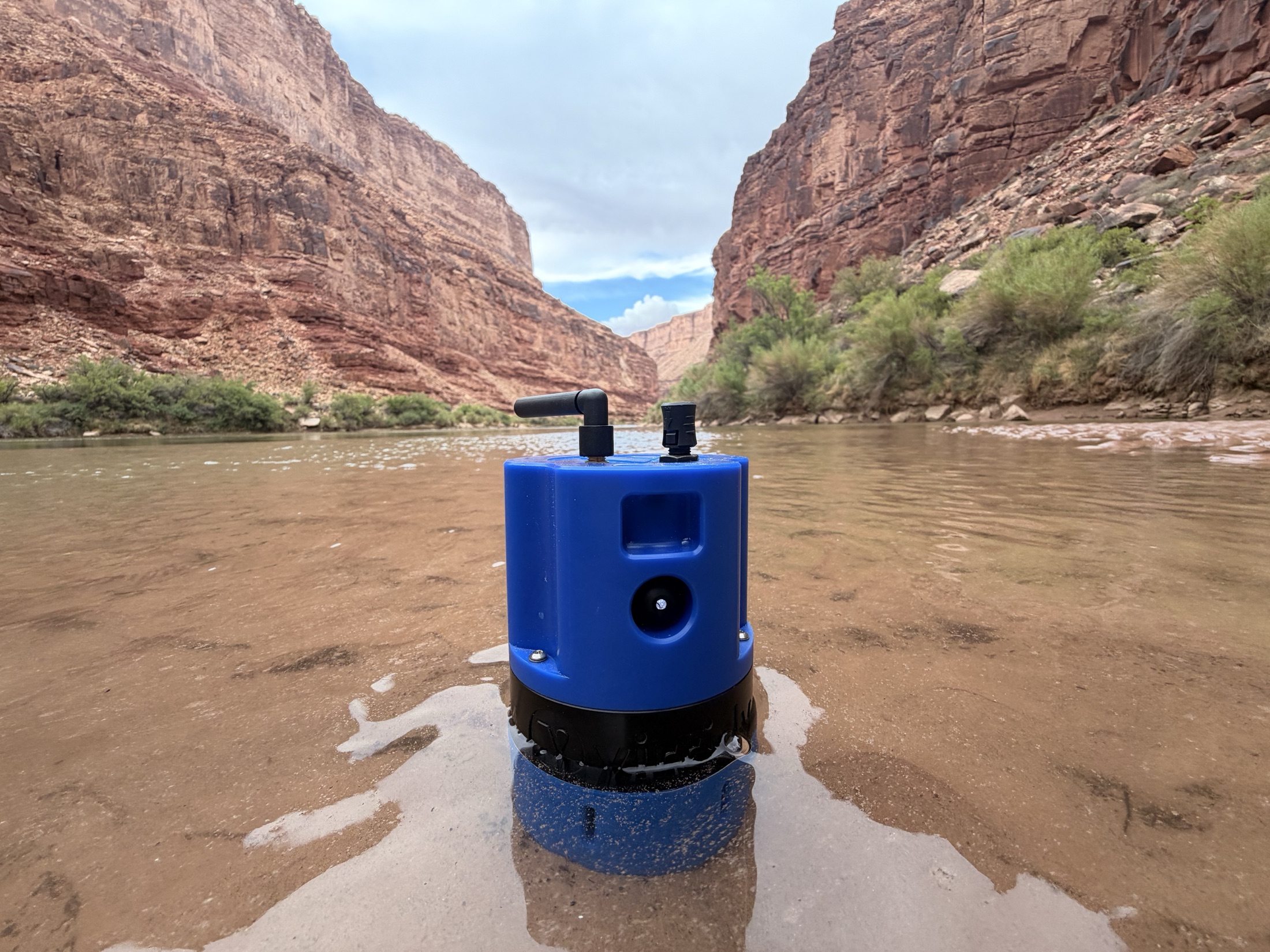
The Virridy Lume: a sensitive, continuous, in-situ, remotely reporting tryptophan-like fluorescence sensor for semi-quantification of fecal contamination as E. coli.

Continuous, Real-Time Microbial Water Quality Monitoring

Public health and pollution-response decisions depend on timely, spatially resolved information. Traditional culture-based sampling typically delivers results 24–48 hours after collection and is often too sparse to capture short-lived or localized contamination events. As a result, many contamination pulses remain undetected.

Lume directly measures tryptophan-like fluorescence and applies data-driven modeling to estimate microbial contamination risk in near real time. Each sensor operates autonomously and transmits data via cellular or satellite networks to a secure cloud platform, where results are available through dashboards and APIs.

For the cost of a single grab sample, Lume delivers thousands of in-situ microbial estimates.

Proven Performance for Microbial Risk Assessment

Field and laboratory evaluations demonstrate that Lume provides reliable quantitative and categorical estimates of microbial contamination across environmentally relevant concentration ranges. Model-estimated E. coli concentrations closely align with laboratory reference methods over approximately three orders of magnitude.

75%+
Accuracy across 0–1,000 CFU/100 mL
>94%
Categorical accuracy with site-specific calibration
7%
Mean absolute percentage error (log-transformed)
1 year
Battery life on hourly sampling

What Lume Enables

Continuous microbial data allow organizations to move from reactive to proactive water quality management. By capturing rapid changes that occur between laboratory samples, Lume supports earlier detection of contamination events and more confident decision-making.

Detect contamination as it occurs

Support same-day recreational water advisories

Continuously screen source and receiving waters between lab analyses

Prioritize confirmatory sampling

Improve situational awareness during storms and infrastructure failures

Reduce uncertainty between sampling campaigns

Real-World Applications

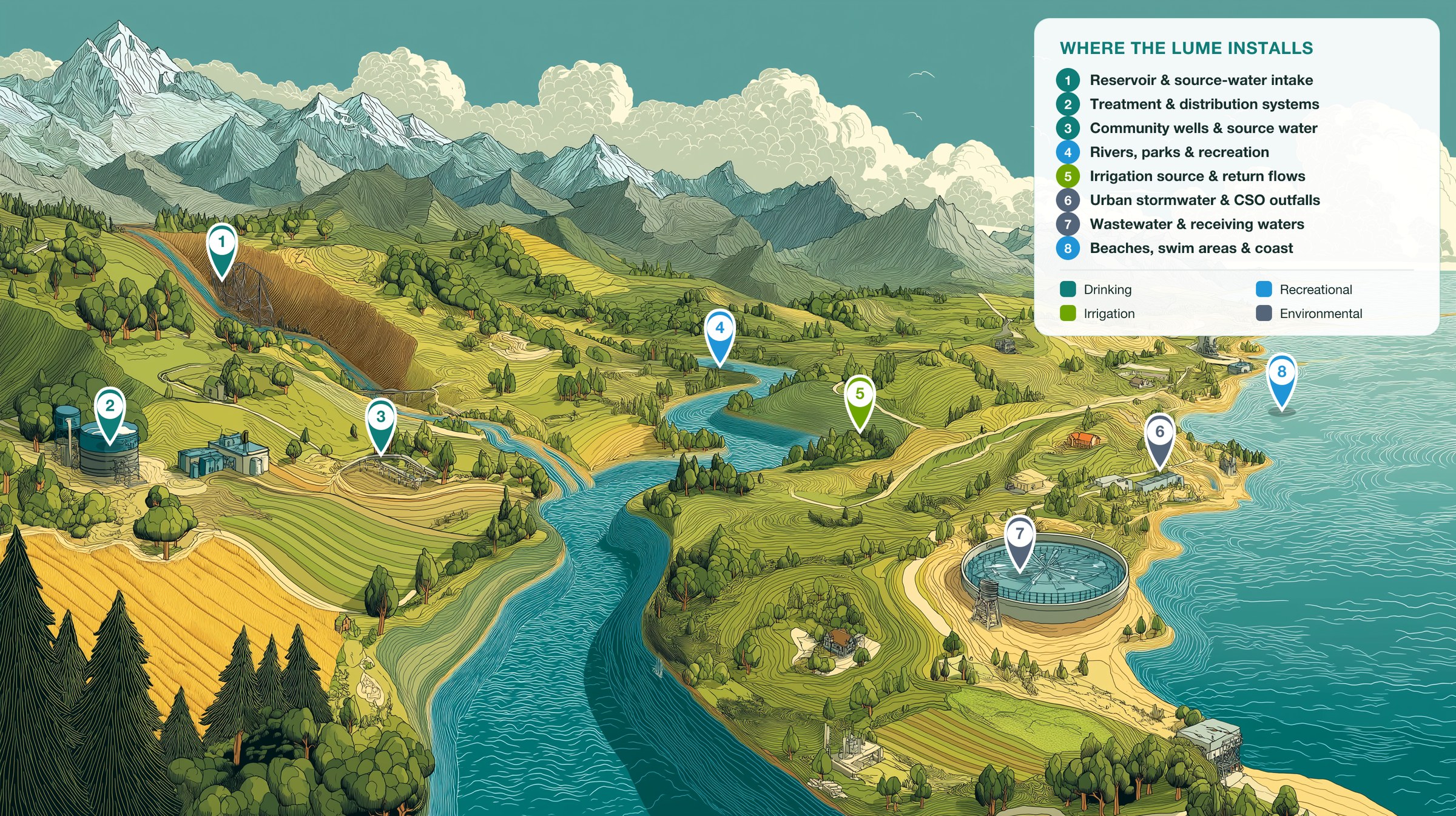
Lume is deployed across a range of monitoring contexts, including drinking water source protection, wastewater discharge monitoring, and recreational water management.

Piped systems & community wells
Filtration & disinfection processes
Drinking water source protection
Treated effluent & receiving waters
Urban stormwater & CSO systems
Agricultural return flows
Rivers, beaches, parks & marinas
Public-facing dashboards & alerts
Recreational water & beach advisories

Built on Science. Ready for Scale.

Lume builds on peer-reviewed research and multi-site field validation to address the limitations of traditional microbial monitoring approaches. By combining optical sensing with adaptive data modeling, Lume maintains performance under changing environmental conditions where static thresholds and infrequent sampling fall short.

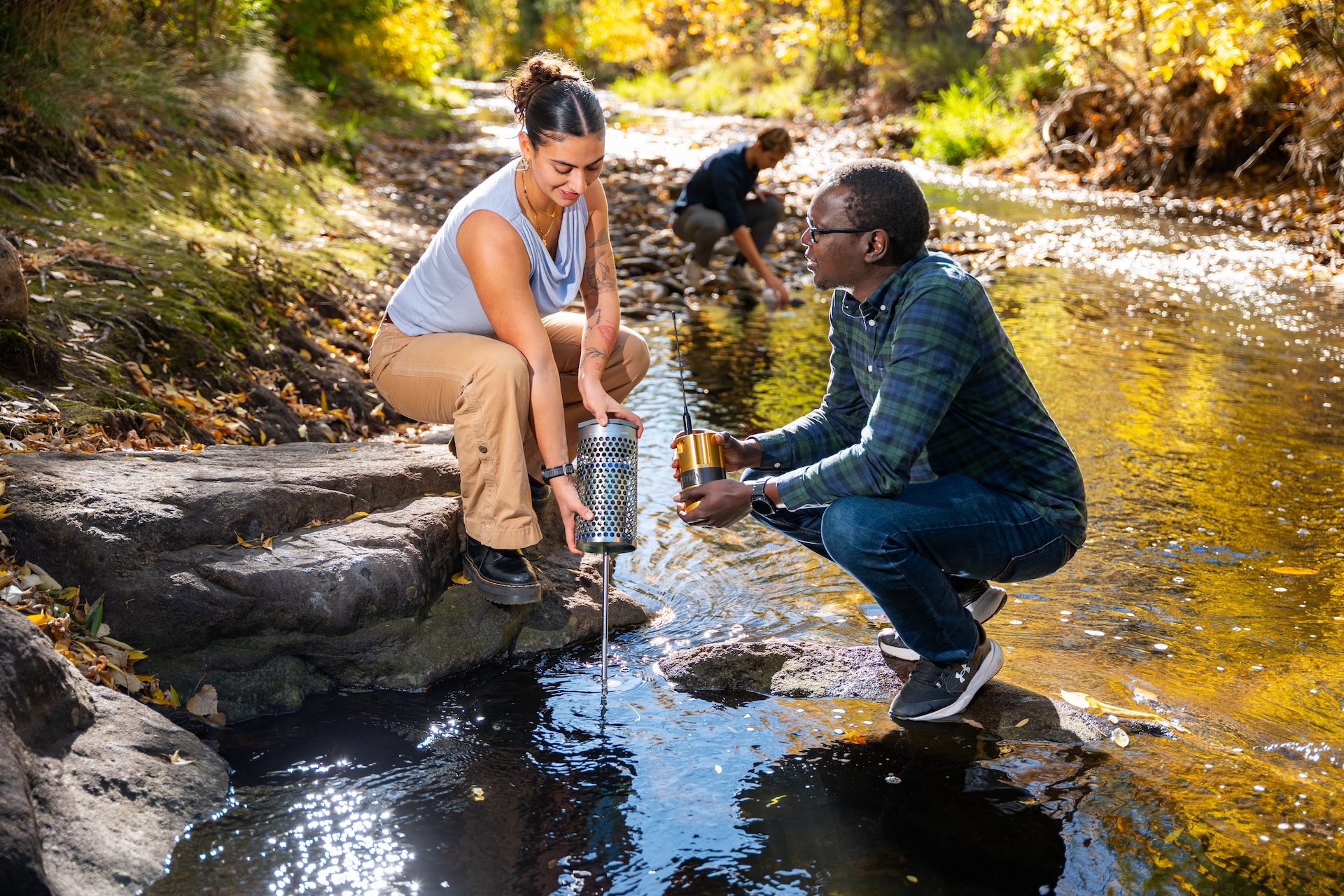
Virridy team at Mortenson Center

Start an Array Today

$200 /month per site
10+ unit standard deployment · 12-month minimum
  • Device lease included
  • Cellular/satellite connectivity
  • Secure cloud hosting & data dashboard
  • API access
  • Fleet health monitoring
  • Remote updates
  • Onboarding & siting support

Alex Johnson

Chief Strategy Officer
[email protected]
+1-503-504-9668

See the Lume in Action

Hardware and Analytics

Sensor Capabilities

  • TLF wavelengths detect E. coli
  • Configurable Cl-A (algae) & FDOM (organic matter)
  • Turbidity sensor for NTU quantification
  • Temperature sensor for data and correction
  • GPS coordinates
  • Quantifies E. coli levels directly
  • No regular calibration or cleaning required
  • Lower retail cost than competitors

Operations

  • Sampling: 30 sec to 24 hours (remote config)
  • Reporting: 5 min to several days
  • Battery: up to 1 year (hourly sampling, 24h reporting)
  • Power: solar or wall charging
  • Cellular & satellite connectivity
  • Single integrated unit — no external power/telemetry
  • Machine learning microbial quantification
  • Protected online dashboard and API

Implementation Design

  • Array design: joint siting plan to bracket sources
  • Deployment: mount, power, connect — data in minutes
  • Operations: alerts for exceedances/events
  • Periodic siting optimization as patterns emerge
  • Verification via continuous data streams

Data Governance & Integration

  • Role-based dashboard access
  • Export to existing platforms via API
  • Audit trail: device health, uptime, data quality
  • Documentation: SOPs, siting rationales, QA/QC

Product Design

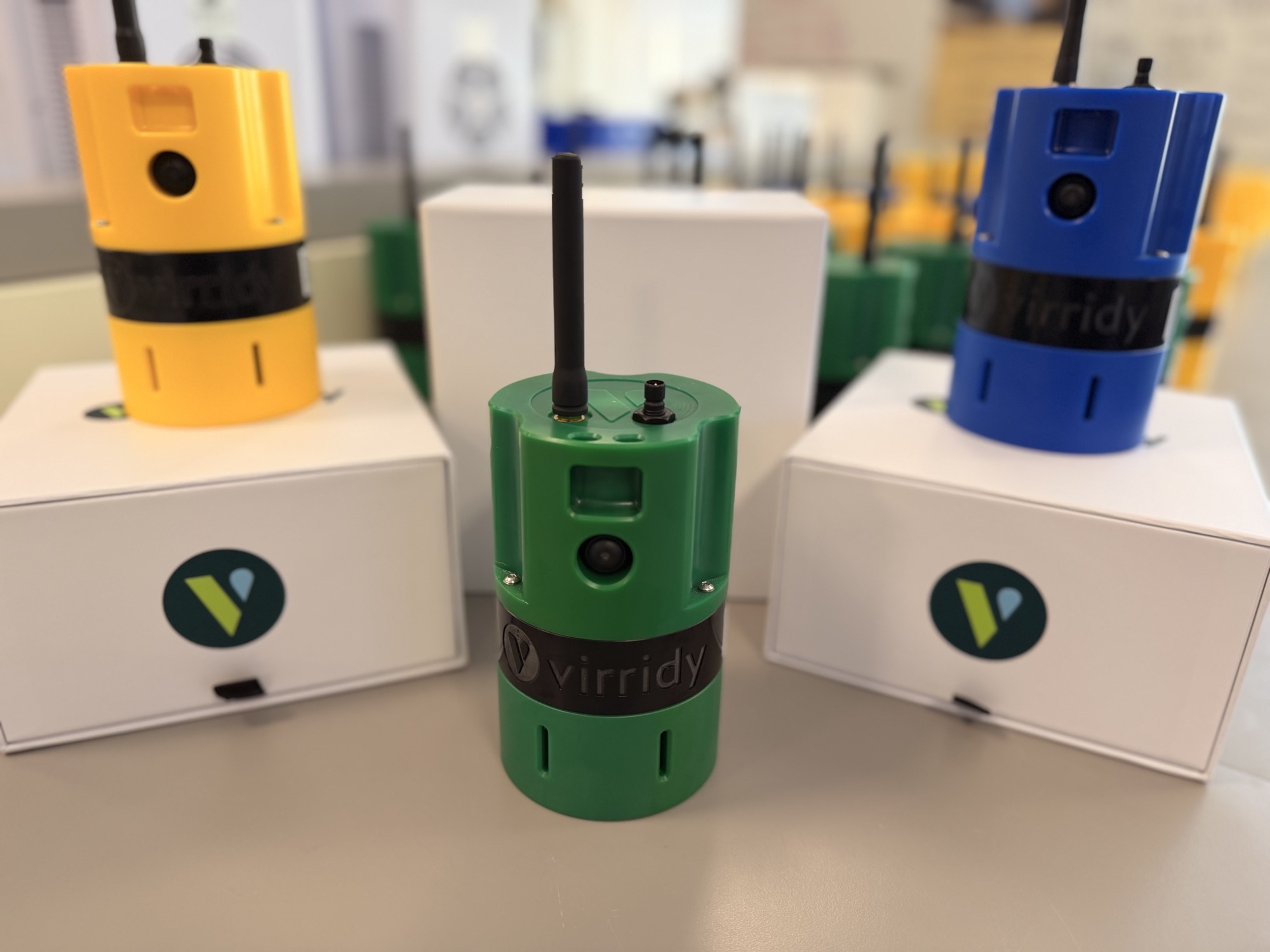
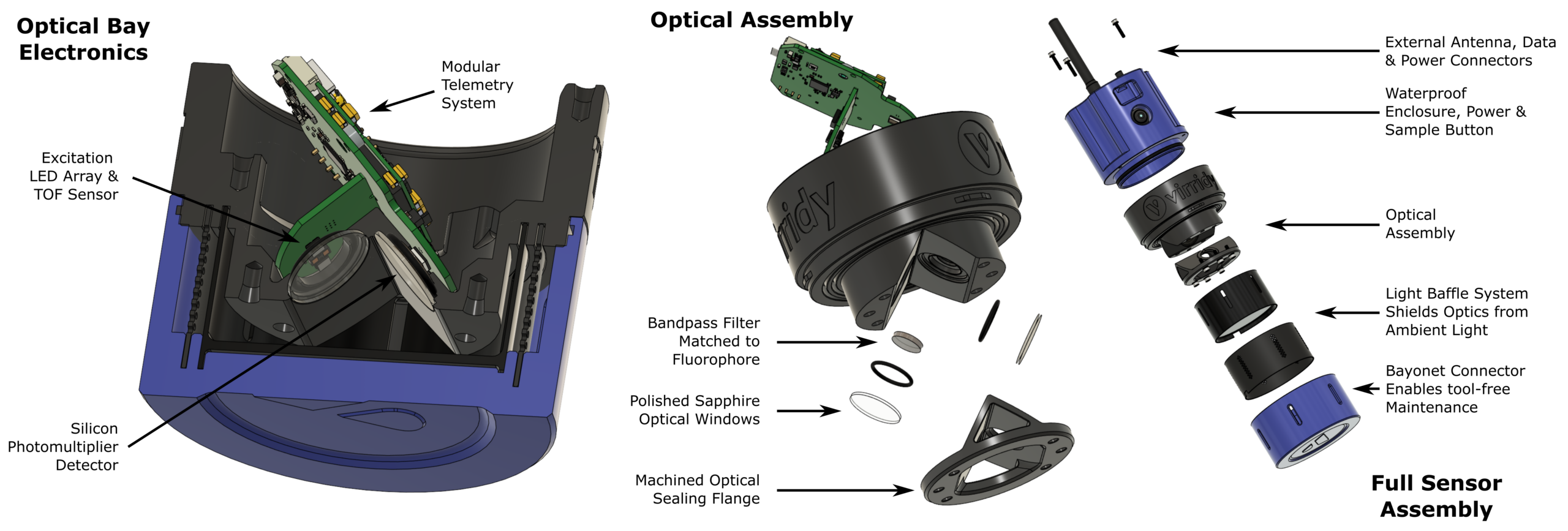
The Lume is a fully integrated, internet-connected (cellular and satellite) sensor solution. The sensor head measures tryptophan-like fluorescence, turbidity and temperature.

Sampling can be remotely programmed for between 30 seconds and 24 hours, and reporting between 5 minutes and several days. With 24-hour reporting, the battery will last up to a year on a single charge.

The sensor head can be cleaned with a hand-twist removal of the cover. The battery can be charged with solar or wall power. The antenna can be internal to the Lume, an external whip (as pictured) or on a wire.

Lume Hardware Design
Lume V1.2 Exploded View

Performance and Calibration

Drinking Water

The Lume has been validated for drinking water monitoring across chlorinated and unchlorinated supplies. Binary classification at regulatory thresholds of 1 and 10 CFU/100 mL yields 91–92% overall accuracy with Cohen's kappa of 0.82–0.84, indicating strong agreement between sensor and laboratory classifications with minimal bias toward either class. The sensor also detects chlorine residual presence with 85% accuracy.

Binary Classification Confusion Matrices
Confusion matrices for binary classification of water quality using sensor predictions versus laboratory-observed E. coli concentrations at two regulatory thresholds: (a) 1 CFU/100 mL and (b) 10 CFU/100 mL. Both thresholds yielded high overall accuracy (0.91 and 0.92), balanced accuracy (0.91 and 0.92), and Cohen's kappa (0.82 and 0.84), indicating strong agreement between sensor and laboratory classifications with minimal bias toward either class.
Chlorinated vs Unchlorinated Performance
Sensor performance for E. coli prediction across chlorinated and unchlorinated water samples. (a) Scatter plot of predicted versus laboratory-observed E. coli concentrations on logarithmic axes. Post-chlorinated samples exhibited greater scatter and a tendency toward underprediction, whereas pre-chlorinated samples clustered near the detection limit. (b) Confusion matrix for binary classification of chlorine residual presence showing 85% overall accuracy, balanced accuracy of 85%, and Cohen's kappa of 0.70.

Natural Waters

The Lume algorithm has been developed and extensively validated against Colilert® E. coli in freshwater systems. The platform has also been successfully deployed in saline coastal environments, where regulatory compliance is based on enterococci. In these initial ocean deployments, Lume achieved over 76% categorical accuracy using just six training samples.

Boulder Creek E. coli Comparison
Boulder Creek test dataset: comparison of model-estimated and laboratory-measured E. coli concentrations. Over 75% of predictions fall within the analytical uncertainty bounds of the Colilert reference method, with 7% MAPE in log-transformed space.
Categorical Classification Matrix
Bench-scale validation: categorical classification into three management-relevant bins (<10, 10–100, >100 MPN/100 mL). Balanced accuracy 95%, Cohen's kappa 0.84.
Global Cross-Validation Regression
Global dataset: temporally structured cross-validation. RMSE ranged from 0.55 (training) to 0.63 log units (test), with MAPE below 22% across both splits.
Paris Seine Classification
Seine River, Paris: binary classification (<900 vs >900 CFU/100 mL) using three sensors. Training accuracy 95.7%, test accuracy 96.8%.

Why a Lume Array Beats Grab Samples

An array provides the temporal and spatial coverage that single grab samples cannot. By measuring every few minutes, arrays capture short-duration events—storm pulses, combined sewer overflows, irrigation returns—that a weekly schedule typically misses. Placing sensors to bracket reaches, confluences, and outfalls adds spatial resolution, allowing teams to localize hotspots and rank likely sources.

Bracket reaches, confluences, and outfalls

Localize hotspots and rank likely sources

Higher decision accuracy for advisories and source ID

Reduce routine logistics and lab spend

Rapid outcome verification of BMPs and repairs

Monitor chlorinated piped water and distributed systems

Papers

Knopp, W., Klaus, J., Wilson, D., Vlah, M., Ross, M., Thomas, E. (2026)
EarthArXiv preprint
Thomas, E., Wilson, D., Kathuni, S., et al. (2021)
Science of The Total Environment
Thomas, E., Brown, J. (2020)
Environmental Science and Technology
Thomas, E., et al. (2020)
Frontiers in Climate, V2. A6
Bedell, E.; Sharpe, T.; Purvis, T.; Brown, J.; Thomas, E. (2020)
Sustainability, 12, 3768
Thomas, E., Jordan, E., Linden, K., et al. (2020)
Science of The Total Environment, 727, 138772

Patents

DMRV Fusion Networks
Thomas et al., US Patent-Pending (2023)
Family: Drinking Water Treatment, In-Stream Water Quality, Wildfire Impact Prediction, Water Quality Parameter Prediction, Water Quality Variability Attribution
Alarm Threshold Microbial Fluorimeter and Methods
Bedell, E., Fankhauser, K., Sharpe, T., Wilson D., Thomas, E.
US Patent 11,506,606 B2 — Nov 22, 2022
Machine Learning Techniques for Improved Water Service Delivery
Wilson, D., Coyle, J., Thomas, E., Croshere, S.
US Patent 11,507,861 B2 — Nov 22, 2022
System and Methods for Operating a Microcomputer in Sleep-Mode and Awake-Mode
Fleming, M., Spiller, K., Thomas, E.
US Patent 10,564,701 — Feb 18, 2020
Distributed Low-Power Monitoring System
Thomas, E., Fleming, M.
US Patent 9,077,783 B2 — July 7, 2015

Explore Lume

Interact with live sensor data or explore the water quality dashboard.

Data Visualizer Water Quality Dashboard TLF Research Visit virridy.com/lume